Machine vision
Digitize instruments and equipment state
Turn analog gauges, indicator positions, fluid levels, and visible equipment conditions into timestamped data that supports machine-health metrics and predictions of remaining useful life.
SnapShot combines machine vision, thermal imaging, and full-spectrum vibration and acoustic data with seasoned operator knowledge—giving field teams the context to manage more assets safely and efficiently.
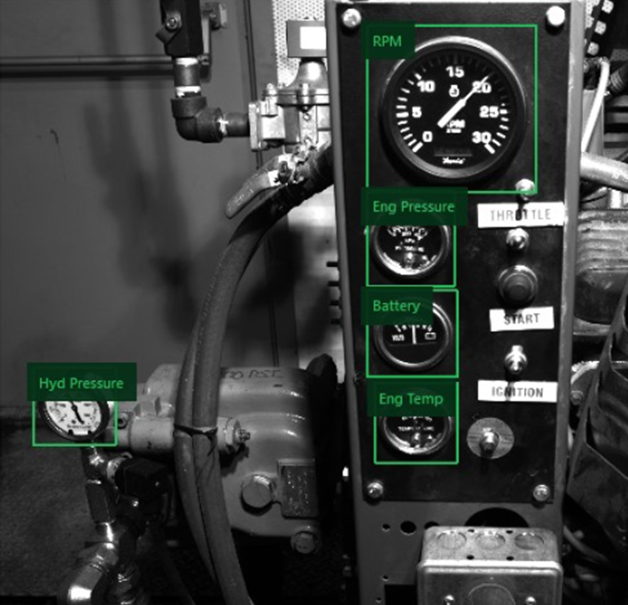
Legacy sites contain valuable instruments, equipment signatures, and visual operating cues, but many still depend on periodic rounds and isolated readings. SnapShot creates a continuous digital layer around them.
Better visibility without a control-system replacement.
Field hardware captures gauges, thermal conditions, full-spectrum vibration and acoustic data, equipment state, and defined work areas.
Lightweight local models convert high-volume signals into readings, trends, events, and reviewable evidence—even with constrained connectivity.
Experienced operators review events, explain the operating context, and help the models learn the patterns that matter.
Teams see what changed, why it may matter, and the evidence behind it—so each operator can manage more assets efficiently.
Each signal is useful alone. Together, they give the operator a more complete and actionable understanding of the asset.
Turn analog gauges, indicator positions, fluid levels, and visible equipment conditions into timestamped data that supports machine-health metrics and predictions of remaining useful life.
Monitor equipment and process temperatures without adding intrusive instrumentation, and preserve thermal evidence around changing conditions.
Capture wide-band waveform and frequency-domain data so operators and models can detect emerging patterns, compare baselines, and investigate the underlying spectrum.
Use defined camera views to identify site access and observable workflow steps, flag possible deviations for human review, and retain visual records that support regulatory documentation.
Machine vision extends beyond digitizing gauges to interpreting equipment state, fluid levels, and visible operating conditions. Combined with thermal, vibration, and acoustic signals, these observations feed machine-health metrics and predictions of an asset’s remaining useful life, helping operators plan maintenance and anticipate failures.
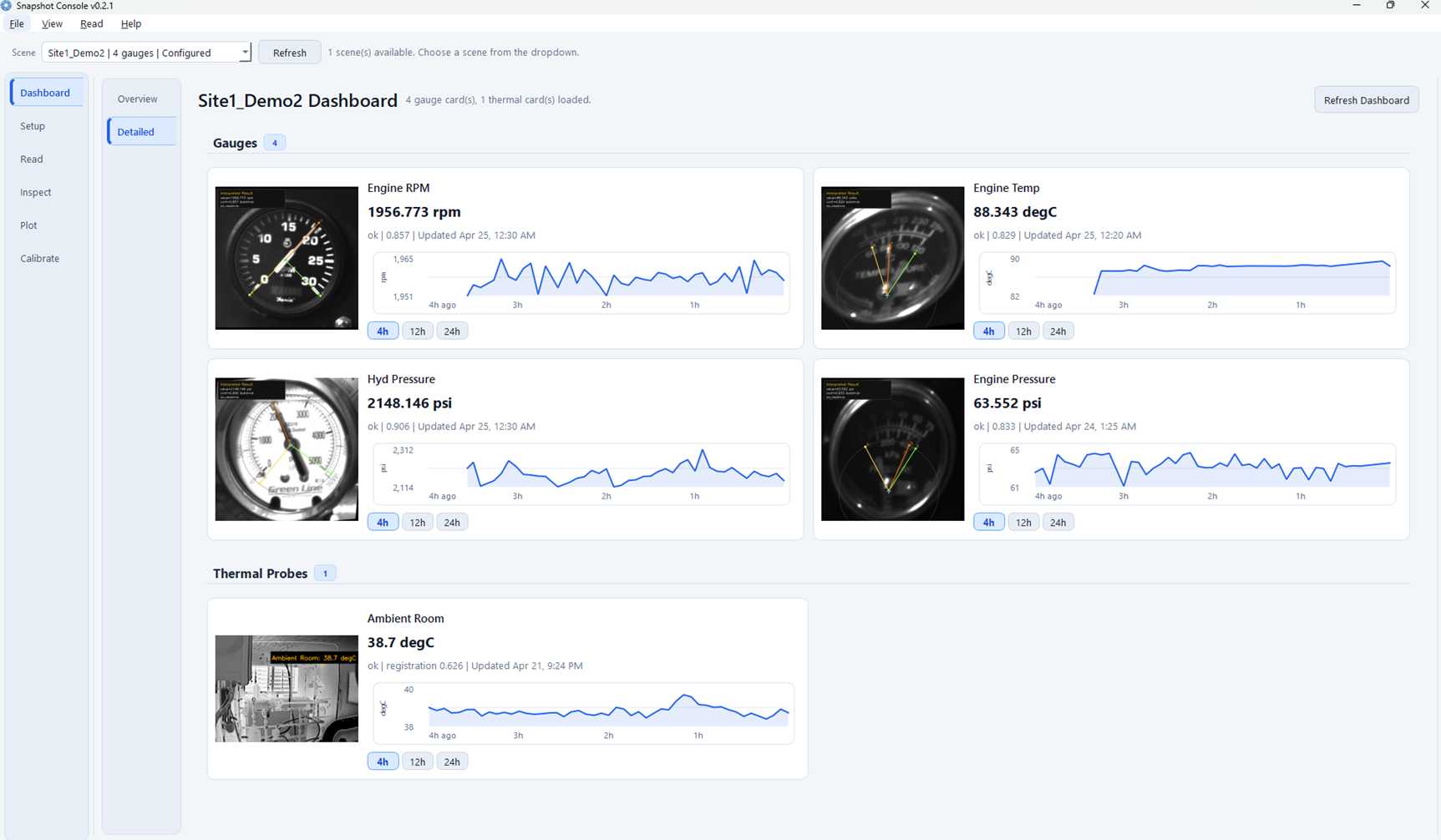
See how SnapShot turns field images into readings, trends, and equipment-health estimates. These screens show the software in use.
Most types of analog gauges can be read and trended at high sample rates without adding to the existing SCADA load. One camera can read all the gauges in a scene, keeping costs low.
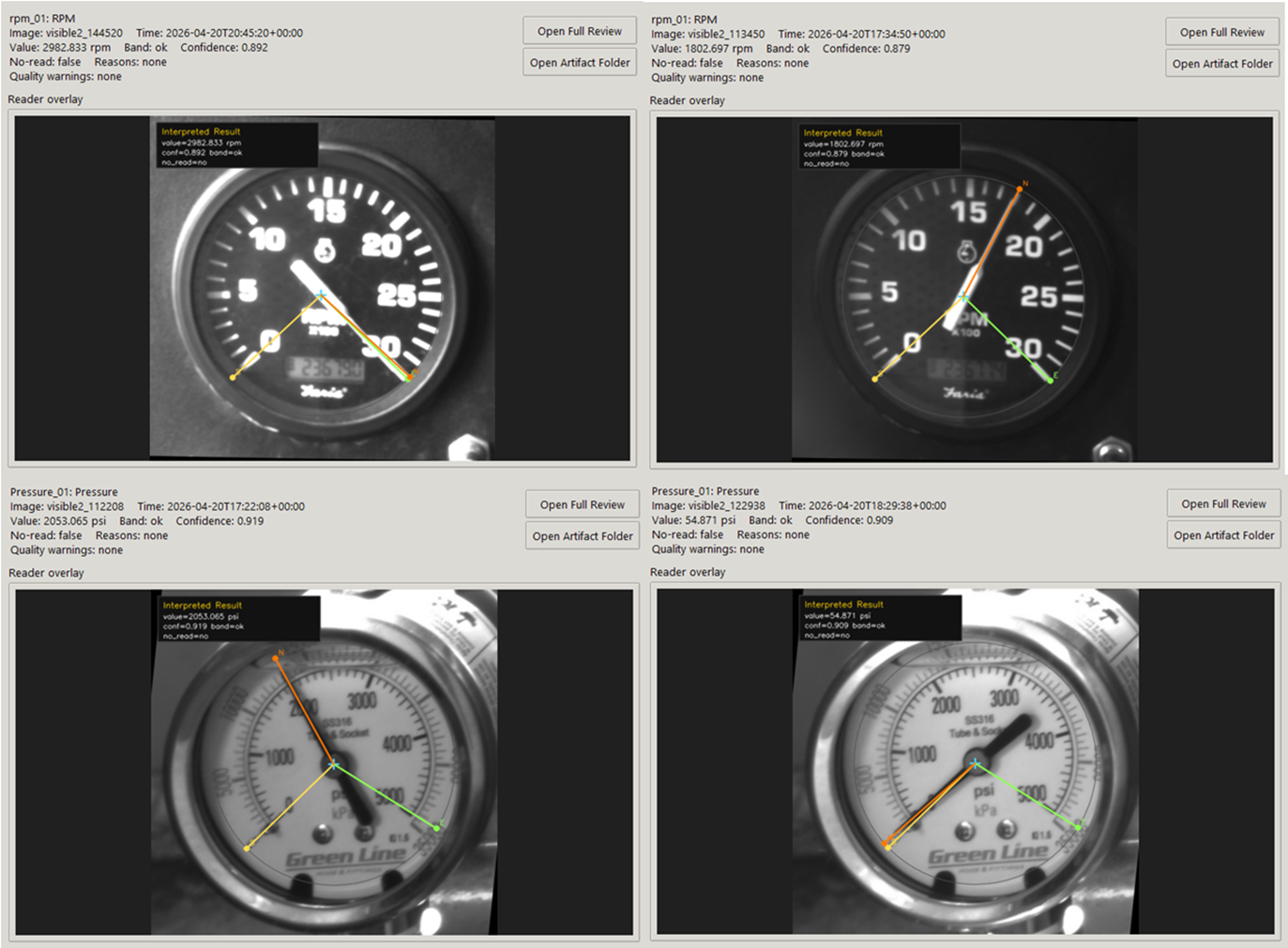
The overall process conditions at a site can be inferred from the signals collected by a SnapShot deployment. Together, these signals create a digital twin for predicting fault conditions, identifying anomalies, and simulating operational changes. Source images let operators check the readings behind each trend.
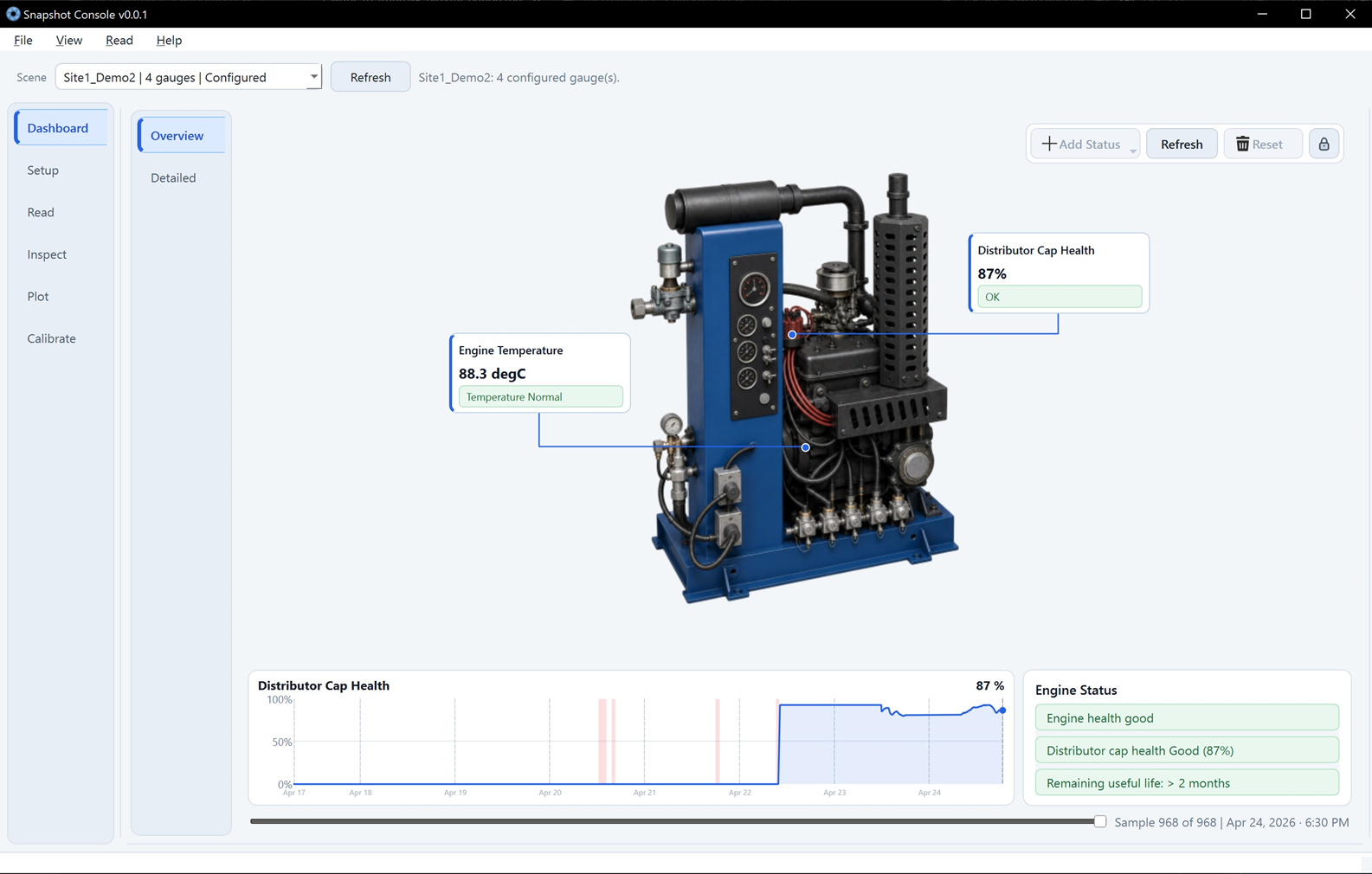
A machine-life model used to predict small-engine distributor-cap failures at a heavy-oil site connects equipment condition with maintenance planning.
Field expertise is more than labels. Experienced operators connect weak signals, operating history, weather, process changes, and visual cues. SnapShot captures those inferences during model development and review.
The result: elegant, accurate, lightweight models designed to run at the edge—produced faster because the training loop starts with real operating judgment.
SnapShot is designed around the way remote energy assets actually operate: intermittent connectivity, existing infrastructure, and the need for evidence—not just another alarm. It directs attention to the assets and events most likely to need human judgment.
A focused pilot establishes signal baselines, captures expert operating inference, validates edge models, and identifies where continuous visibility can expand the operator's effective reach.
Tell us a little about your operation. We'll reach out to arrange a discovery meeting and discuss where SnapShot could help.